How to Catch Smallmouth Bass in Rivers & Lakes
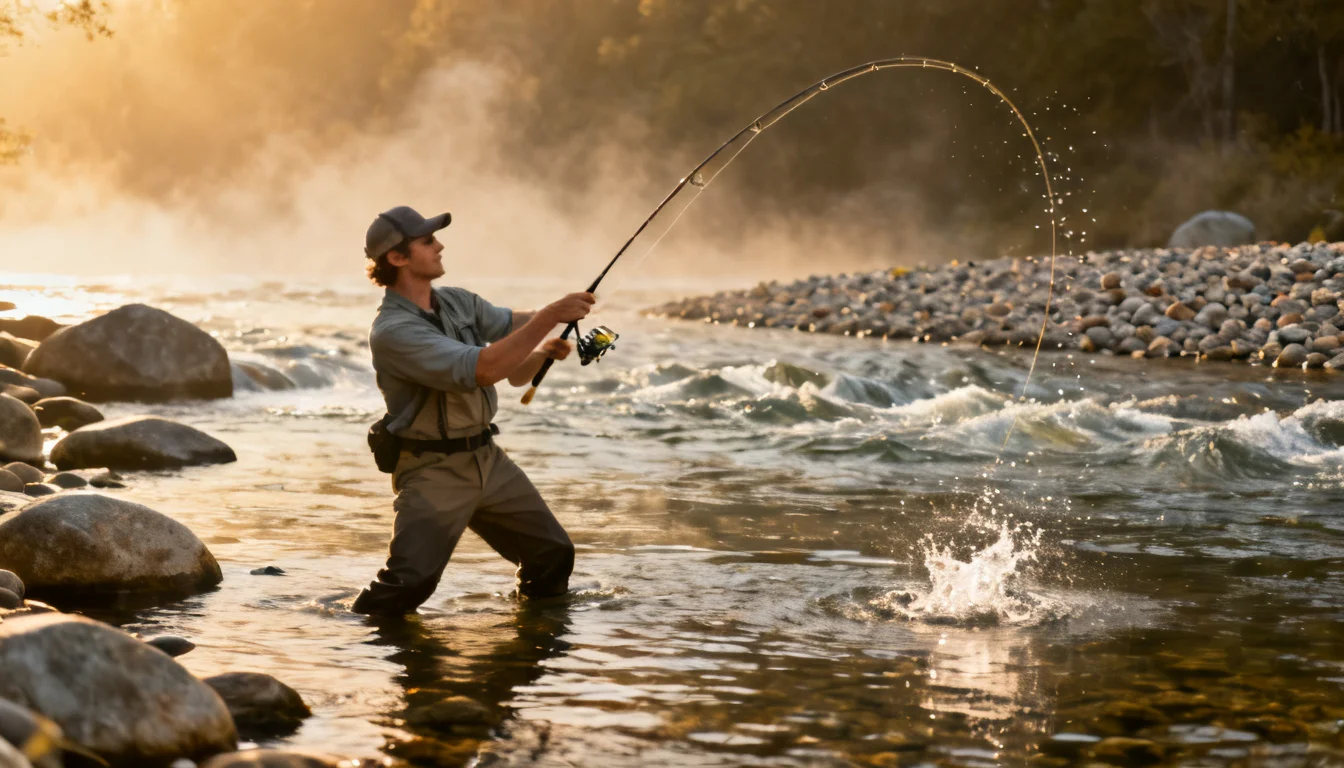
How to catch smallmouth bass comes down to three things: finding rock, matching the crayfish, and fishing current correctly. Get those right and you'll catch bronzebacks where most anglers come up empty — these smallmouth bass fishing tips cover the best lures, rigs, and tactics for both rivers and lakes. (If you're after the green fish instead, see our how to catch largemouth bass guide.)
When to Fish for Smallmouth Bass
Smallmouths are cold-water fish, so timing revolves around water temperature:
| Season | Water Temp | Behavior | Best Strategy |
|---|---|---|---|
| Spring | 50-65°F | Pre-spawn feeding, then spawning on gravel | Best time for trophies — fish shallow rocky points and gravel flats |
| Summer | 65-78°F | Active; heaviest feeding at dawn/dusk | Topwater early/late; deep rock structure midday |
| Fall | 55-68°F | Schooling up, heavy feeding | Crankbaits and spinnerbaits along rock points; big fish time |
| Winter | 40-50°F | Slow, deep, holding on big rocks | Slow jigs and tubes on deep structure |
Best times of day: like most bass, smallmouths feed hardest in the first and last two hours of light. Summer adds a topwater bite at dawn that's worth setting the alarm for — smallmouths smash poppers and buzzbaits on the surface.
Weather edge: smallmouths turn on before a front (falling barometer) and during overcast, drizzly days. Bright, flat-calm, high-pressure days are the toughest — go deeper and fish slower.
Smallmouth Bass Fishing Gear
Rod & reel:
- 6'6"-7' medium or medium-light rod — smallmouths don't need heavy backbone; a lighter rod makes the fight more fun and casts small baits better
- Spinning reel (2500 size) — ideal for light jigs and tubes; the standard choice of smallmouth specialists
A light, fast-action rod also handles the finesse presentations — tubes, ned rigs, and drop shots — that smallmouths demand in clear water, so it covers every rig in this guide.
Line:
- 6-10 lb monofilament or fluorocarbon for most fishing
- 10-12 lb fluorocarbon around rocks (abrasion resistance matters)
- Braid is optional; if used, add a fluorocarbon leader
Hooks & weights:
- 2/0-3/0 offset hooks for soft plastics (tubes are best on jig heads)
- 1/8-3/8 oz jig heads — the core of smallmouth fishing
Best Smallmouth Bass Lures & Baits
Lures (the smallmouth arsenal):
| Lure | When | How to Work It |
|---|---|---|
| Tube jig | Year-round | The #1 smallmouth bait; hop it along rocks and gravel |
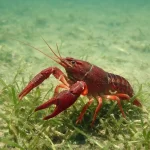
| Jig + craw trailer | Spring & fall | Match the crayfish hatch; drag and pause |
| Crankbait | Summer, rock points | Steady retrieve; let it bump the rocks |
| Spinnerbait | Windy days, current | Burn or slow-roll through seams |
| Topwater popper | Summer dawn | Twitch-pause; explosive strikes |
| Ned rig | Pressure days, finesse | Deadly slow; shake it on the bottom |
Live bait (when lures won't):
- Hellgrammites — the classic river smallmouth bait; hook through the collar
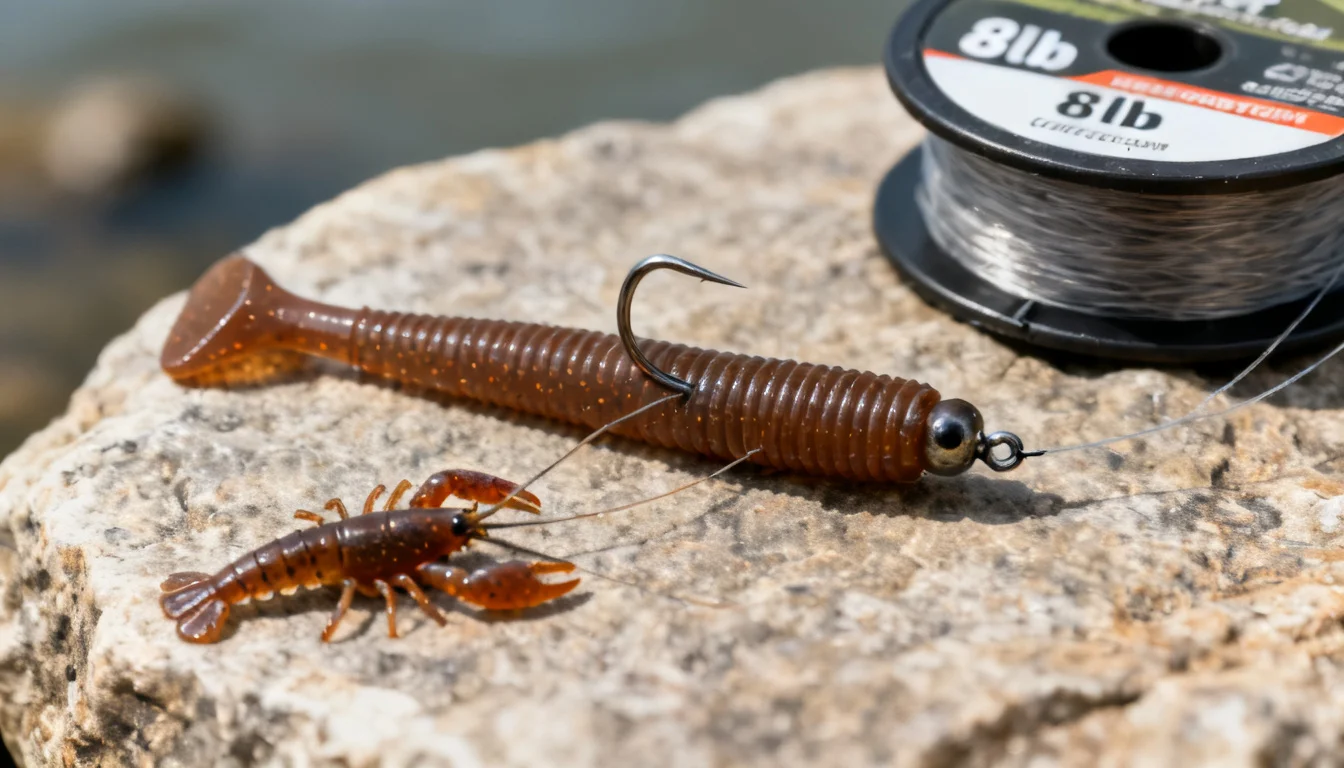
- Crayfish — hook through the tail, fish it on rocks
- Minnows — freelined or under a bobber in current seams
Smallmouth Bass Rigs: The 3 That Catch Fish
1. Tube Jig (the smallmouth standard). Rig a 3-4 inch tube on a 1/8-3/8 oz jig head, hook point buried in the tube's body — snag-resistant on rocks and gravel. Cast to rocks and gravel, let it sink, then hop it with short rod lifts — the tube pulses like a crawfish fleeing. This single rig catches more smallmouths than everything else combined.
2. Ned Rig (finesse for pressured fish). Thread a soft plastic (Z-Man TRD or similar) onto a small mushroom-head jig. Cast, let it sink, and drag it slowly with occasional pauses — the upright bait shimmies on the bottom. Deadly for clear-water smallmouths that have seen everything.
3. Drop Shot (deep summer smallmouths). Tie a small hook 12-24 inches above a weight, rig a finesse worm or small tube, and present it vertically on deep rock points. When summer smallmouths pull deep, this rig puts bait right in their face.
How to Find Smallmouth Bass: Rivers & Lakes
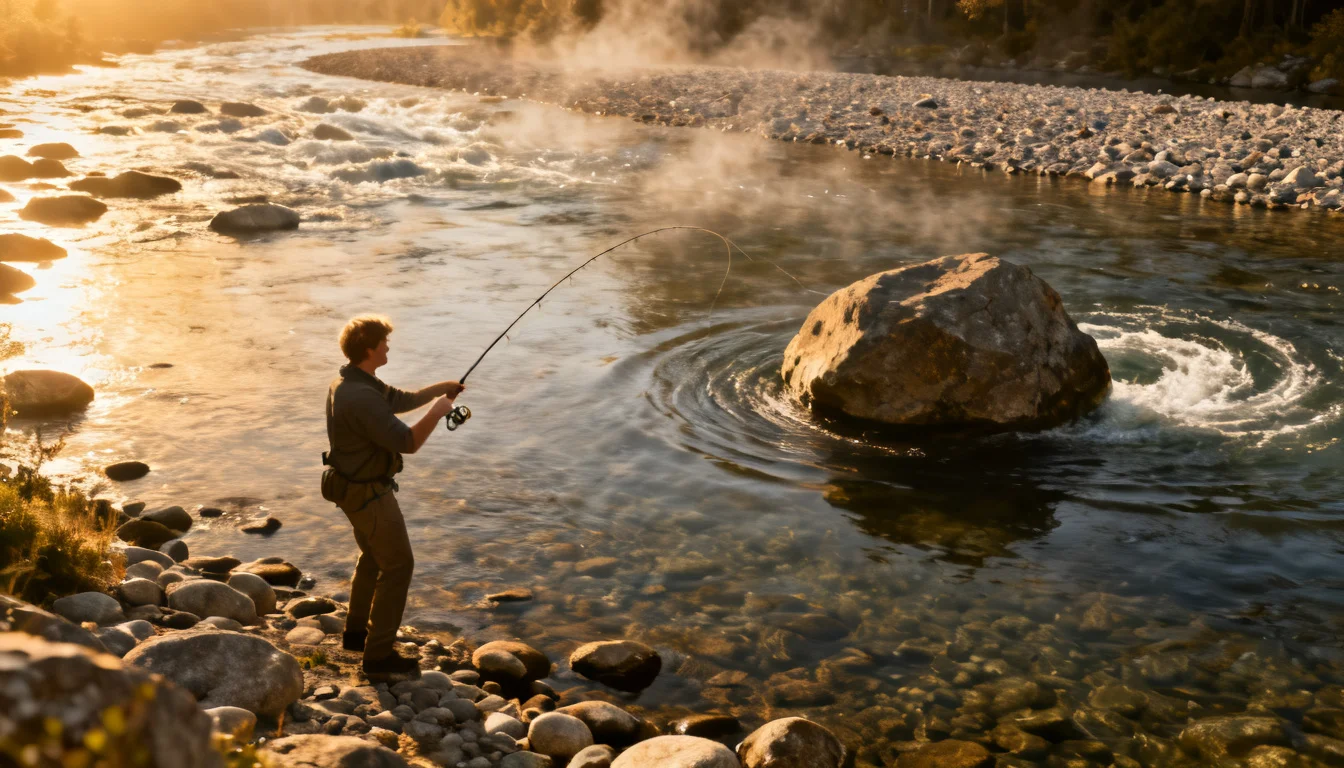
River tactics (current is everything). In smallmouth bass rivers, current is everything. Smallmouths are current feeders — they hold in slack water beside the flow, not in the current itself. Read the river with these patterns (see our how to fish a river guide for structure basics):
1. Behind boulders — the classic lie; cast upstream and let the bait swing into the eddy
2. Eddies and slack pockets — any break in current holds fish
3. Heads of pools — where riffle meets pool, smallmouths wait for food
4. Deep holes below riffles — big smallmouths hold here in summer
5. Gravel bars — spawning and feeding grounds in spring
River tip: fish upstream, cast across and slightly up, and let the current work the bait — a natural drift beats any retrieve.
Lake tactics (structure is everything). In lakes and reservoirs, smallmouths are rock fish:
1. Rock points — cast crankbaits along the point's contour
2. Boulder fields — hop tubes through the gaps
3. Deep ledges and humps — drop shot in summer
4. Gravel flats near drop-offs — pre-spawn staging areas in spring
Common Smallmouth Mistakes (And Fixes)
1. Fishing weeds instead of rocks — you're targeting largemouth habitat. Move to rock and gravel.
2. Retrieving too fast — smallmouths often follow and strike on the pause. Slow down, especially with tubes and jigs.
3. Heavy line and big lures — smallmouths see light line and small baits. Downsize your line and lures.
4. Ignoring current breaks — in rivers, fish the slack beside current, not the current itself.
5. Setting the hook too early on topwater — wait for the feel of the fish, not the splash.
6. One rig all day — switch between tube jig, ned rig, and crankbait until you find what they want.
How to Catch Smallmouth Bass FAQ
Do smallmouth bass fight harder than largemouth?
Most anglers say yes — smallmouths are more acrobatic, jump more often, and pull harder pound-for-pound. They're widely considered the toughest freshwater fighter.
How deep do smallmouth bass go in summer?
When summer water warms, smallmouths often hold at 15-25 feet on deep rock points, ledges, and humps during the day. They move shallow to feed at dawn, dusk, and night — which is when the topwater bite happens. For more on their behavior and habitat, see our smallmouth bass species guide.
What color tube bait is best for smallmouth bass?
Green pumpkin, brown, and watermelon are the proven colors — they match crayfish, the smallmouth's #1 food, in most waters. In clear lakes, natural translucent tones work best; in stained water, add chartreuse or orange.
Do you need a boat to catch smallmouth bass?
No. Bank and wading anglers catch smallmouths regularly — rocky lake shorelines and river current seams within casting range produce all season. A boat helps you reach deep summer structure, but it's not required.
Can you catch smallmouth bass in winter?
Yes, though slowly. Winter smallmouths hold deep on big rocks and feed sparingly; slow jigs and tubes fished right on the bottom, or live minnows, are the winter pattern. Ice fishing for smallmouths is a growing northern tradition.
What size smallmouth bass is a trophy?
A 4-pounder is a great fish in most waters, and 5-6 lb is a genuine trophy — the world record is 11 lb 15 oz from Dale Hollow Lake, Tennessee (1955). In many rivers, a 3 lb fish is the fish of the year.